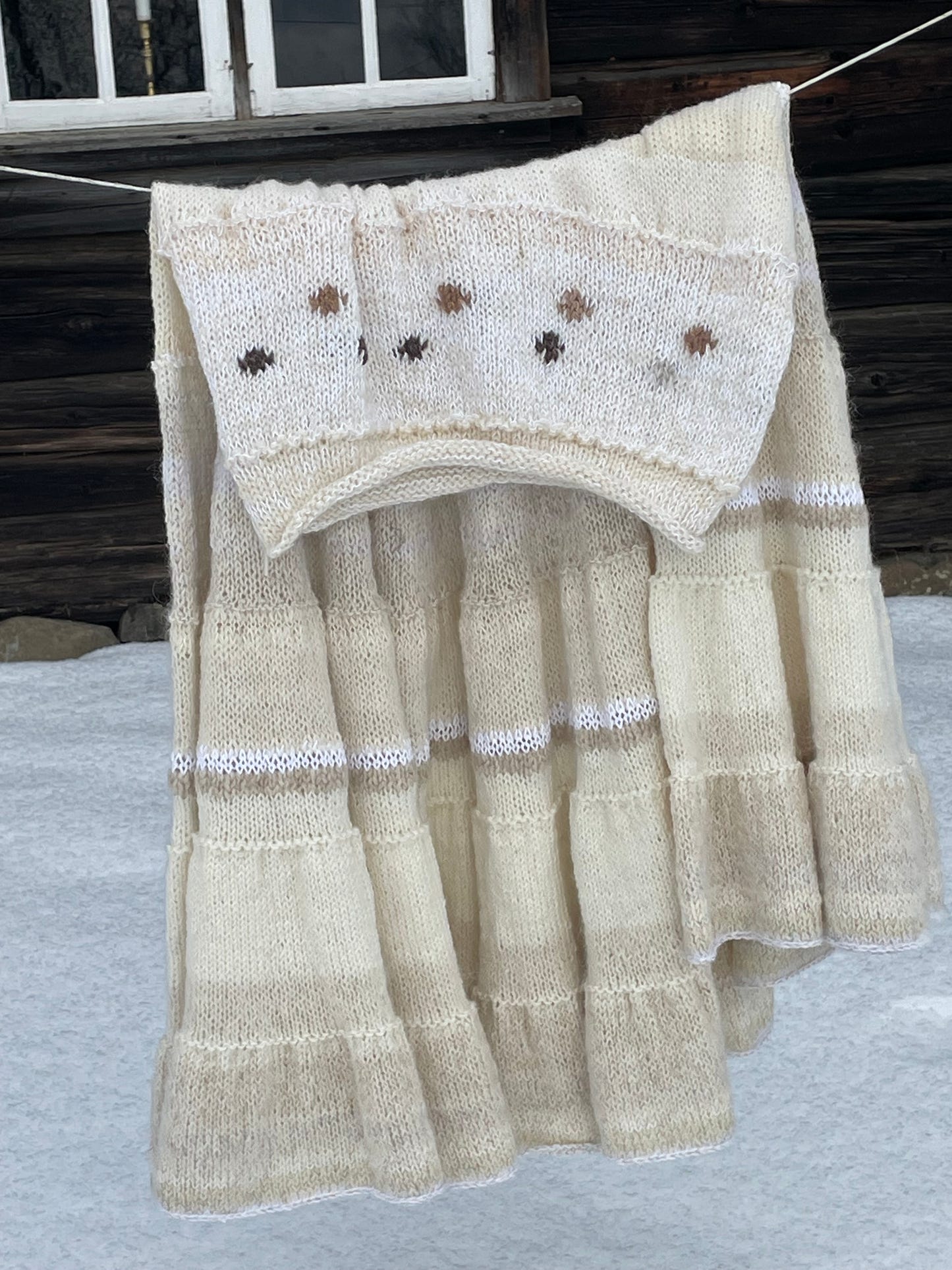
Bobbles
Bobbles are small knitted balls that stand out from the garment. Nine of my patterns use them. Here's what they are, where they belong, and the one trick that decides whether they turn out well.
What bobbles are
A bobble is made by knitting several stitches out of one stitch, working a few rounds on them, and gathering them back together. The result is a small ball that lifts away from the surface.
It's one of the few details in knitting that is genuinely three-dimensional. An eyelet pattern makes openings, a cable makes shadow — a bobble actually sticks out.
Where I use them
Almost always on the sleeve, and almost always together with something else. On Rosie the bobbles meet an eyelet pattern. On Green Eyes and La Vie en Rose they sit in half brioche. On Wild Rose they're meant to look like small flower buds.
The reason is simple: bobbles all over a garment is a lot. Bobbles on a puff sleeve become a detail you notice.
Blocking — what makes the difference
Bobbles get their shape after washing. Straight off the needles they look flat and a bit random. Block the garment lightly and they settle, straighten up and get the depth they're supposed to have.
Skip the blocking and you can't see what you've knitted. This is the question I get most often about bobbles, and the answer is almost always the same.
Yarn, needles and gauge
- 7 mm needles in most of them.
- Gauge 12 stitches × 10 cm.
- Level: Beginner plus. The bobble itself isn't difficult — it's just more steps than an ordinary stitch.
- Mohair works well, because the halo softens the edge of the ball. In a really tight yarn, bobbles can come out hard and a bit knobbly.
Bobbles use a little extra yarn. Not much, but it isn't nothing.
How to knit a bobble
I've made a video that shows it.
The rest of the pattern techniques are in Knitting School Part 7, along with stripes and cables.
All the patterns with bobbles
Jumpers
- Green Eyes – The Sweater
- Krokus – The Sweater
- La Vie en Rose – The Sweater
- Midsummer Love – The Sweater
- Rosie – The Sweater
- Wild Rose – The Bohemian Favourite
Jackets and cardigans
Bobbles are most often combined with half brioche and puff sleeves in my patterns.


Cosymonday
O – The Skirt - The Statement Skirt
Strikkeoppskrift på maxiskjørt